“Fan Ø 1 960 mm, 18 blades; blade-off test passed at 104 % N1.”
Q
Quality · 10:42
Please attach the blade-off containment report for the FAT.
P
Performance · 11:05
1 980 mm matches the nacelle lines in ICD-310 rev C.
MechanicalQualityApprove · 0 / 2
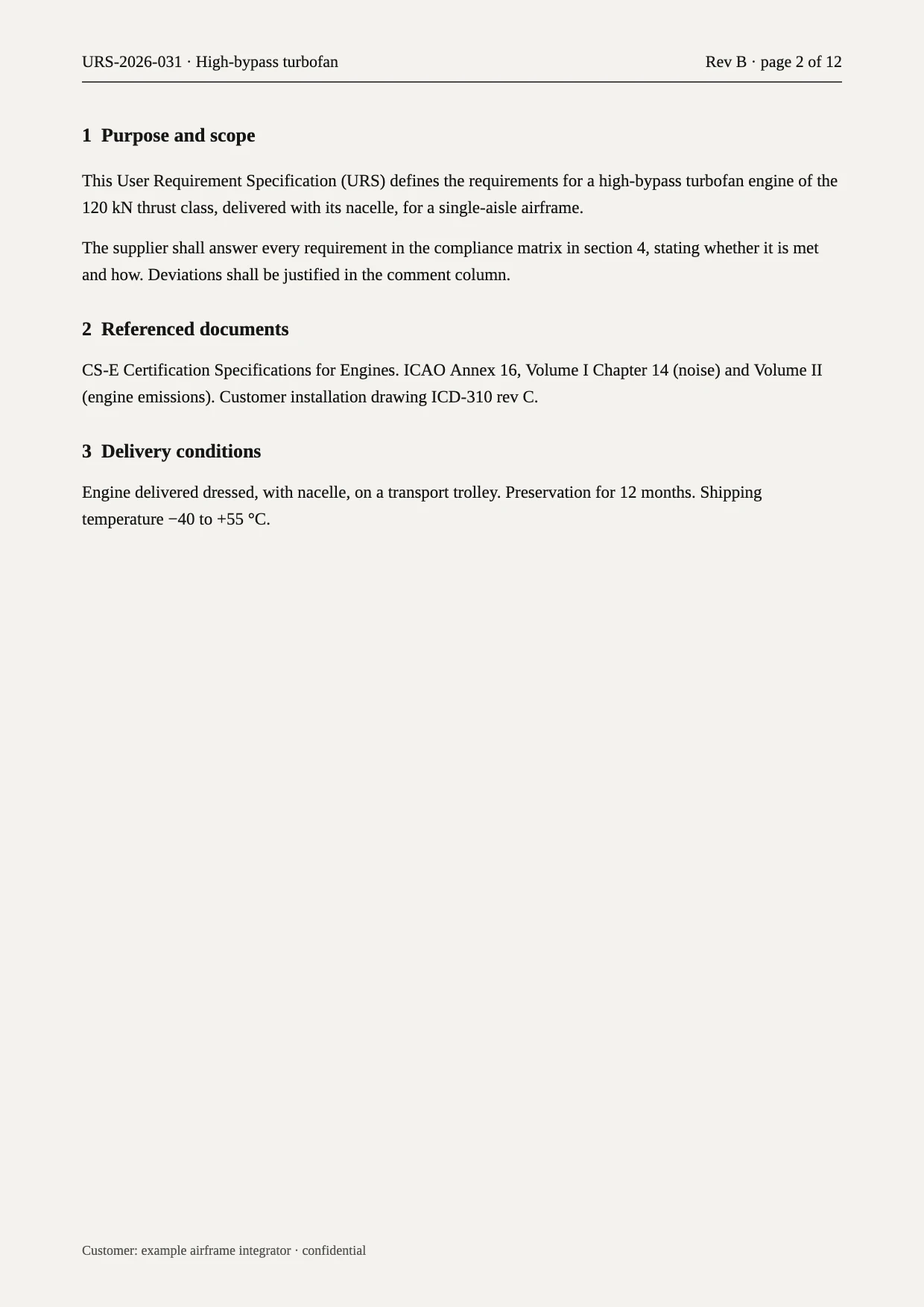
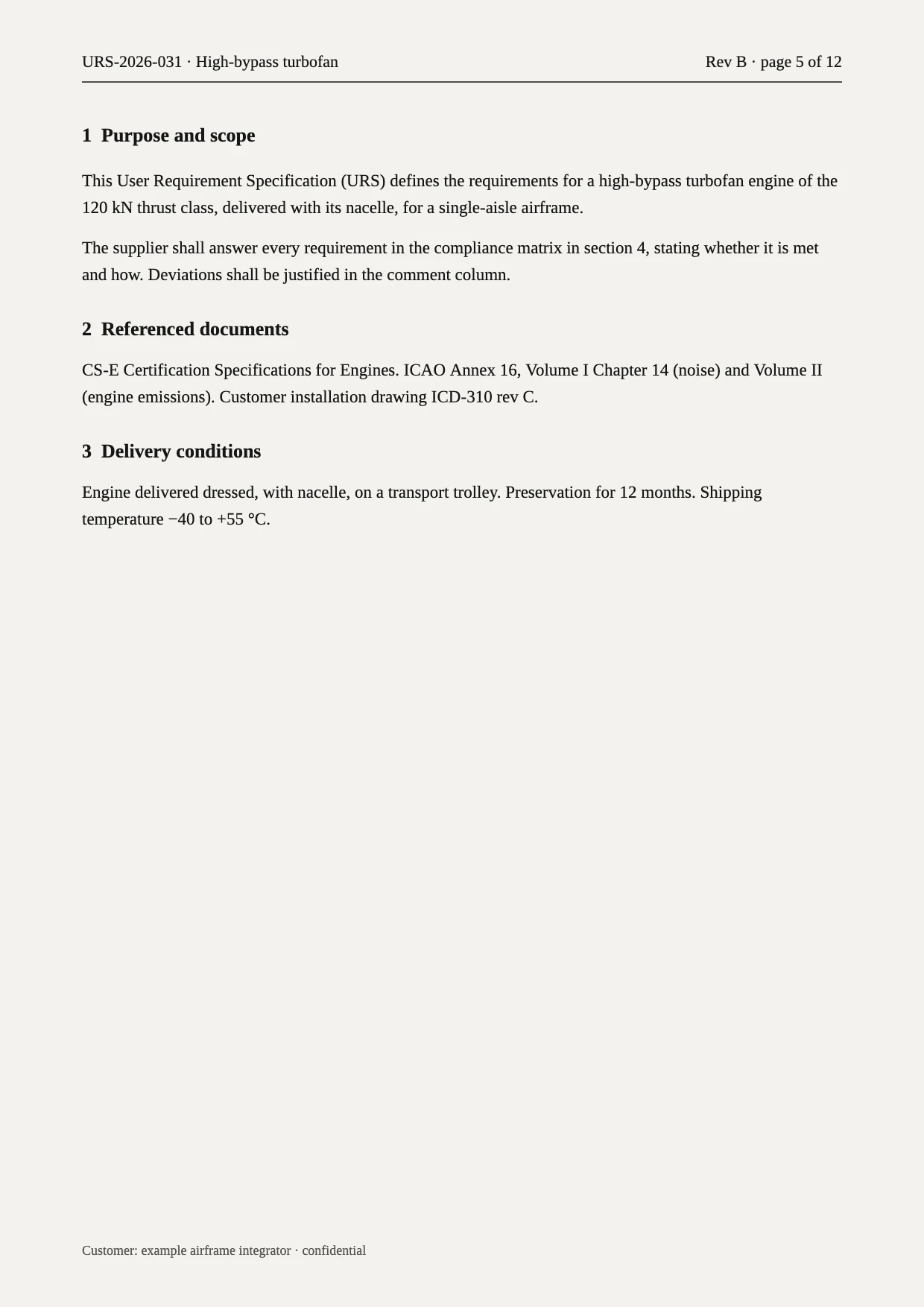
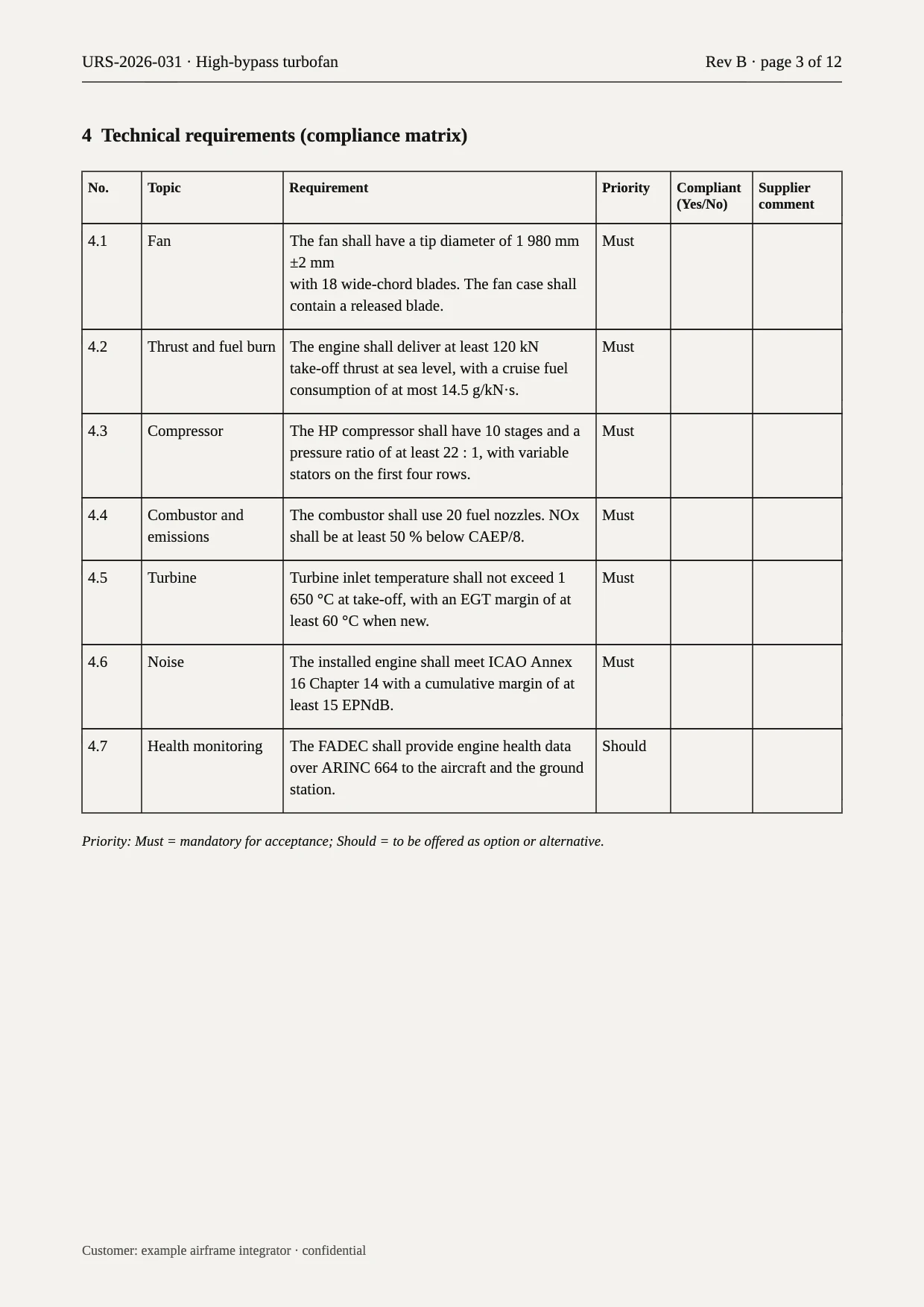
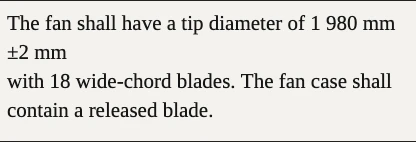
REQ 4.1 · · FanExtracted from p.3 · aligned
Ø 1 980 mm ±218 bladesMUST
✓Yes✕No
MMechanical · you
PDF to Requirementsgraphenix reads the customer's PDF and becomes the one place where every requirement is assigned, answered and signed off.Scroll to begin
Every mechanism you build starts as a customer's PDF.
One URS: 142 pages, 186 requirements, four departments that each have to answer their part.
Behind every part is a requirement someone had to answer.
Who answers what
Each requirement belongs to a specialist. The fan to Mechanical, the turbine inlet to Performance.
A review is only as good as its routing: the right engineer, on the right requirement, with time to answer it properly.
The URS
One PDF, four teams, six copies, and no one sure which is current.
These documents are not treated as a single source of truth: comments get lost, and the document ends up in several versions that are not synchronized.
Example document · URS-2026-031, high-bypass turbofan
Extract and annotate
Upload the PDF once. graphenix returns 186 numbered requirements, each linked to its page.
Every requirement becomes an item with an owner, a status and a thread. Engineers answer, annotate, approve or reject, and see each other's work live.
Collaborate
Every annotation lands in one place.
Each department sees the same requirement, the same part and each other's notes. Requirements you answered on an earlier project come back with that answer and its source.
Approve
The supervisor sees who is done, who is late, and which requirement is holding things up.
Every approval lands in the audit trail. When the last one is in, the answers freeze into a signed baseline.
Result
Build what was agreed.
The signed baseline is the single source of truth. A change after sign-off shows up as a change and is quoted as one. And the requirement nobody could meet was seen on day four, not at acceptance.
Your engineers still answer every requirement themselves; that takes as long as it always did. What graphenix removes is the paperwork around the answers.
Currency
A review counts as active for about two months. Revisions: one and a half per URS on average. Plan prices converted from CHF.
Hours of paperwork per URS
By hand23 h
With graphenix3.6 h
Split the PDF into requirements
Route to departments, chase answers
Dig up earlier answers
Compare revisions
Build the compliance matrix
Hours saved a year238
Saved a yearCHF 28,512
graphenix a yearCHF 8,280Starter
Net saving a yearCHF 20,232Pays for itself in 4 months
Not in the sum
The requirement that can't be met, but was accepted anyway.
Found at acceptance instead of in the review, one of those can cost more than the project's whole margin.
Pay per active project. Unlimited users.
An active project is one customer URS, from upload to sign-off. Every plan has unlimited users and departments. Signed-off projects are archived for free.
One more URS?CHF 950 once, on top of any plan. Your subscription stays as it is.
Just one tender?CHF 950 per URS, without a subscription.
Prices excluding VAT. Billed annually, you save 20 % against monthly billing; monthly billing can be canceled every month. Fair use: about 400 specification pages per project. Standards, correspondence and revisions don't count. Plan prices converted from CHF.
Your next URS is already in someone's inbox.
In 30 minutes we show you graphenix from upload to sign-off, and work out with you which plan fits your projects.